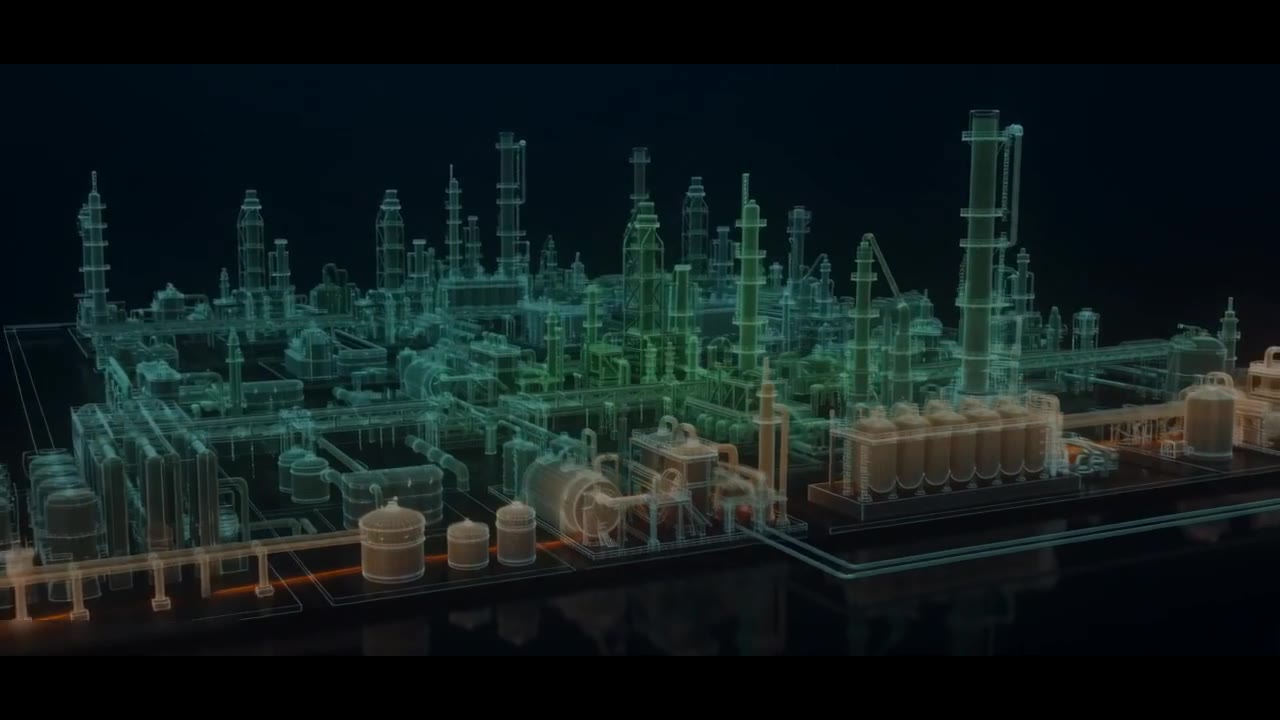
Video library · 5:45
VERISO | Process and Barrier
Connect the intent of the hazard study with operating protection, checks, changes and decisions with clear responsibility.
Captions are available in the player. The transcript is below.
Read the full transcript
VERISO | Process and Barrier
Running time: 05:45.840
00:00.000 | Three hours before start-up
It is three in the morning. Start-up is planned for six. Maintenance records show a transmitter being calibrated. An alarm is inhibited. A temporary bypass remains open. Each record tells part of the story. The question for the person taking the shift is more important: what protection is actually available, and what has changed since the hazard study?
00:22.840 | The protective picture
Veriso Barrier connects the hazard study to the operating life of the plant. It brings the study, protective functions, equipment, checks and changes into one operator record. Engineers can trace the intended protection. Operations can see its current declared condition. Owners can see what needs attention, who is responsible and when a temporary arrangement expires.
00:47.040 | Before the HAZOP
The work can begin before a HAZOP. Project information, process descriptions and relevant reference templates help prepare a structured first draft: proposed nodes, parameters, deviations and questions for the study team. Existing assumptions and missing information remain visible. This gives the team an organised starting point for a hazard and operability study, with room for engineering judgement and challenge.
01:14.080 | The team examines the hazard
The study team examines deviations from design intent, considers causes and consequences, challenges safeguards and records actions. For our vessel, a pressure deviation opens a discussion about how containment could be lost and what would prevent or limit the outcome. Decisions, assumptions and actions belong to the team. Veriso keeps their structure and origin visible as the study develops.
01:39.880 | Existing studies become usable records
Existing studies can enter through signed documents, spreadsheets or scanned records. The converter structures the content and retains the link to the original document and row. An engineer reviews the interpretation. Unreadable or uncertain material is surfaced for resolution. The result is a usable study record whose meaning can always be checked against its source.
02:03.240 | A bow tie you can follow
For major-accident scenarios, the study becomes a bow tie. Causes sit on the left, consequences on the right, and the loss of control sits between them. Prevention and mitigation barriers sit on the paths they protect. The linked register shows the protective function, supporting equipment, ownership and checks. Candidate safety-critical equipment is identified for engineering review.
02:28.640 | Find the shared dependency
A barrier diagram is only useful if its dependencies are understood. Two apparent protections may depend on the same transmitter, the same logic or the same person. Veriso connects these relationships. A change to one shared dependency can then be traced across every affected protective function. The same temporary stand-in can also be recognised when it is being counted more than once.
02:53.520 | Bring plant changes into the picture
Maintenance, permits, overrides, change records and field checks connect through agreed interfaces and reporting windows. A work order is linked to the protective function it affects, with the effect reviewed under the operator's rules. If a source stops reporting, the gap remains visible. Silence does not become evidence that the barrier is healthy.
03:16.040 | Every impairment has an owner and a clock
When protection is impaired, the record follows the operator's authorisation process. It identifies the affected function, responsible owner, compensating measure and expiry. Temporary arrangements remain visible until properly resolved. Overdue measures and reused stand-ins demand attention. Where the operator classifies a protection as never to be impaired, that restriction remains part of the decision.
03:41.600 | Change stays connected to the hazard
Management of change follows the same connected record. A proposed change moves through technical review, risk assessment, authorisation, implementation and pre-start-up review before close-out. Temporary changes carry an expiry from the start. The link back to the study makes it possible to see whether the plant, its procedures and its protective arrangements still match the agreed basis.
04:06.440 | Check the protection in the field
Field checks test the declared picture against what is found on the plant. Checks can be scheduled by calendar, operating hours or starts. The person carrying out the check records the finding and its evidence. Effective, partially effective, ineffective and not-yet-checked conditions stay distinguishable. A missing check cannot quietly become a positive result.
04:30.280 | The shift sees what matters
At handover, the picture becomes three clear views. Which barriers are out? Which lines of protection are thinner than the study intended? Which compensating measures are carrying the temporary burden, and when do they expire? Counts have stated totals. Critical conditions stay visible. A serious loss of protection cannot disappear inside an overall percentage.
04:53.200 | The decision becomes the next lesson
The manager can now make a decision under the plant's procedures with the affected protection in view. The record preserves what was known, what was decided and who accepted responsibility. Over time, recurring inhibits, repeated extensions and failed checks reveal patterns. Those lessons return to engineering, maintenance and the next hazard study, so the operating record becomes a source of improvement.
05:20.120 | Protection you can trace
Veriso Barrier brings study intent, changing plant conditions and accountable decisions into one continuous picture. Convert the study. Confirm the model. Connect the records. Check the plant. Run the operating cycle. The operator remains in control. The value is clarity: protection that can be traced from the original hazard to the decision that matters on the next shift.